

Here in the firearms media, we watch trends rise and fall. About every two years or so a handgun’s size or feature suddenly becomes the “must have” thing and the industry responds making more things that fit the new hotness. Within two to three years every major brand has their own response to the hotness and just as we consumers start to really benefit from a selection and competitive prices, a new trend hits.
If you haven’t noticed, here’s a quick list of a few that I’ve seen in the past decade: compact, 4-inch barrel 9mm striker-fired pistols with 15-round capacity; single-stack 9mm pistols about an inch wide; double-stack 9mm hammer-fired 1911s.
During these crazes, there was a brief blip of weapon-mounted lasers being popular. The single-stacks were then forgotten in favor of “micro compacts.” Shortly thereafter everyone needed a red dot on their pistol just in time for those double-stack 1911s to make a return to popularity.
The double-stack 1911 craze was naturally slower to spread due to the guns’ higher prices, which was only amplified by the expiration of GLOCK Gen 3 patents resulting in a flood of GLOCK-based designs capitalizing on minimal R&D and low parts production to create a price war at the bottom.
This all made for entertaining content. Options and competition are great for consumers, but those trends served mostly the categories I would define as “carry guns” or “range guns.” But what about bedside or nightstand guns?
First, of course, we must define what a bedside gun should be. And yes, this definition will vary slightly for the individual as we fortunately don’t all live in the same conditions. A bedside gun doesn’t need to be small and lightweight so we’re freed from the compromises typically made in the name of making a gun easier to carry and conceal. That means we can enjoy the steadier handling and softer felt recoil of a heavier gun and easier control that comes with a larger pistol.
We can also go with a 4-inch or longer barrel to get more complete performance from 9mm ammunition (SAAMI specifies a 4-inch test barrel for 9mm, so most amm0 is loaded to perform as intended from that barrel length).
The very nature of “bedside” implies that one might be startled awake in the middle of the night and need to use the gun in a defensive situation. so ultra short or light triggers would be more a liability than a benefit. Having a predictable and “readable” trigger with a reliable action is more important.
We also know that of all the firearms one might choose, this dedicated bedside gun has a higher likelihood of being used in self defense than those kept locked away in a safe. If it it is used to defend your home and family, that means off it will go for an undefined amount of time…if we ever get it back at all. So a bedside gun should be readily replaceable without having to later explain to junior why there isn’t anything under the Christmas tree this year.
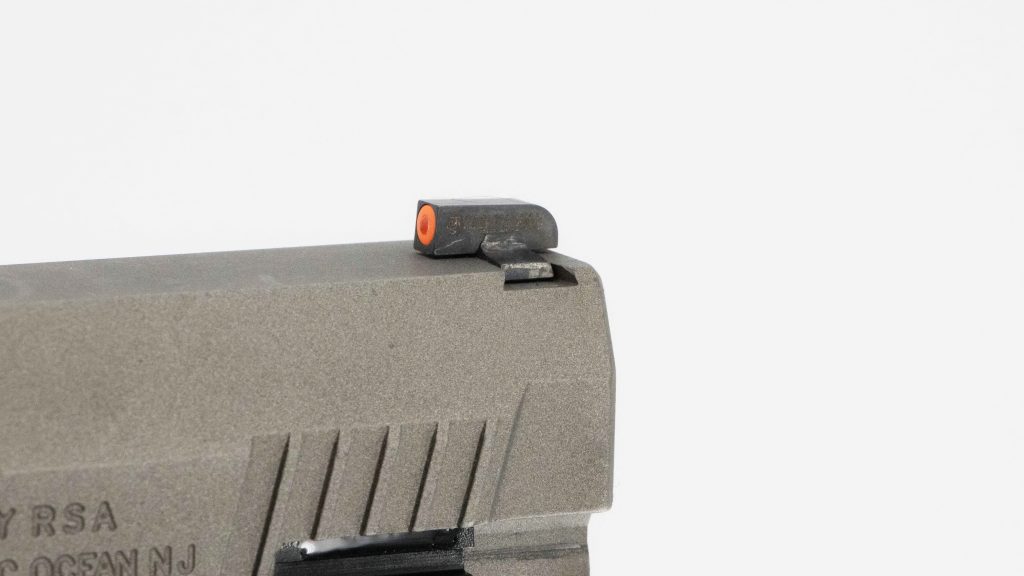
Boiled down, we need a dependable, affordable full-size handgun with a responsible trigger. If you share your bed, or access to the bedside gun you may want to consider something with simple controls that can either be figured out in a hurry, or easily taught to someone who’s less enthusiastic about firearms.
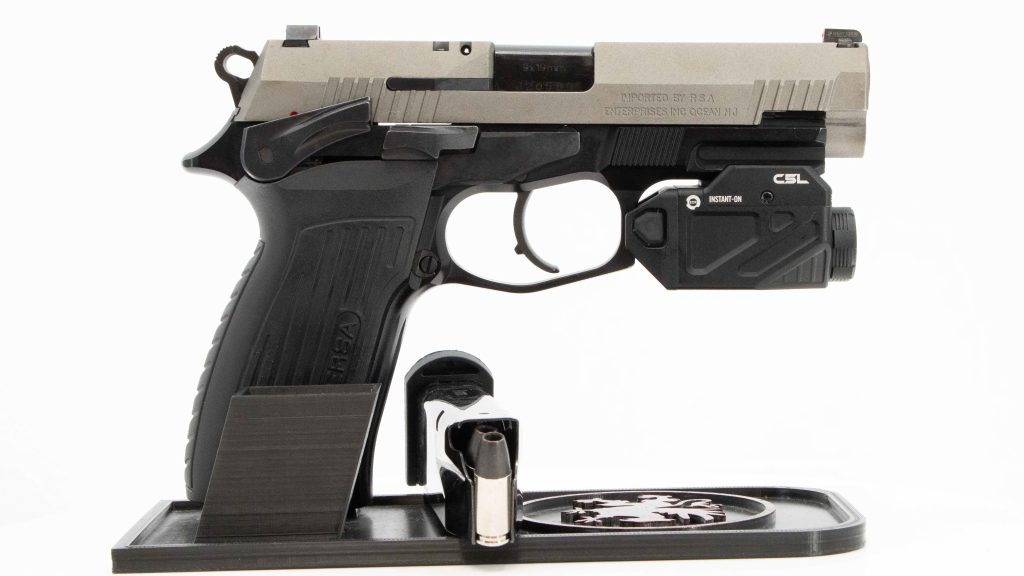
This is why my choice in a nightstand gun for several years has been the Bersa TPR9, and a year or so ago I added the Viridian C5L laser/light combo. That may not be the answer for everyone, but here’s why it works for me.
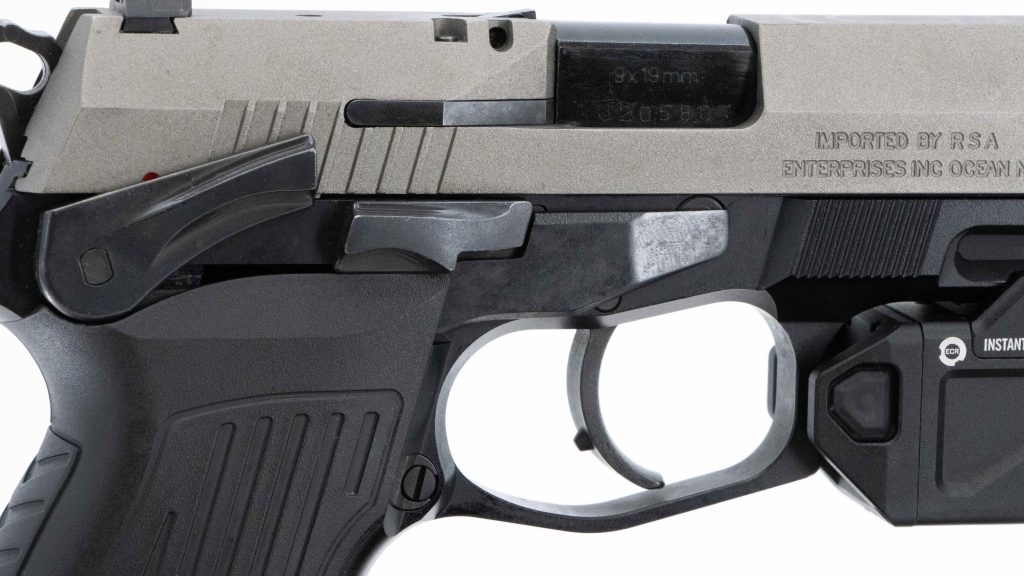
With the 17+1 Bersa TPR9 I have a full-size grip to wrap my hand around, and a safety/de-cocker. That double-action first shot that many bemoan having to learn could be a life saver. I don’t know about you, but I often go to bed tired and sometimes after a few drinks. If startled awake in such a state, I prefer a double-action first pull for a little extra time to ensure a good shot.
Nay-sayers will claim that if it’s not a good time for a shot then your finger should be off the trigger. I agree with that in a static environment, but in a house where a loved one may be darting across or behind the target, or some other situation causes me to need to mentally cancel the shot decision, that double action first pull can make a difference.
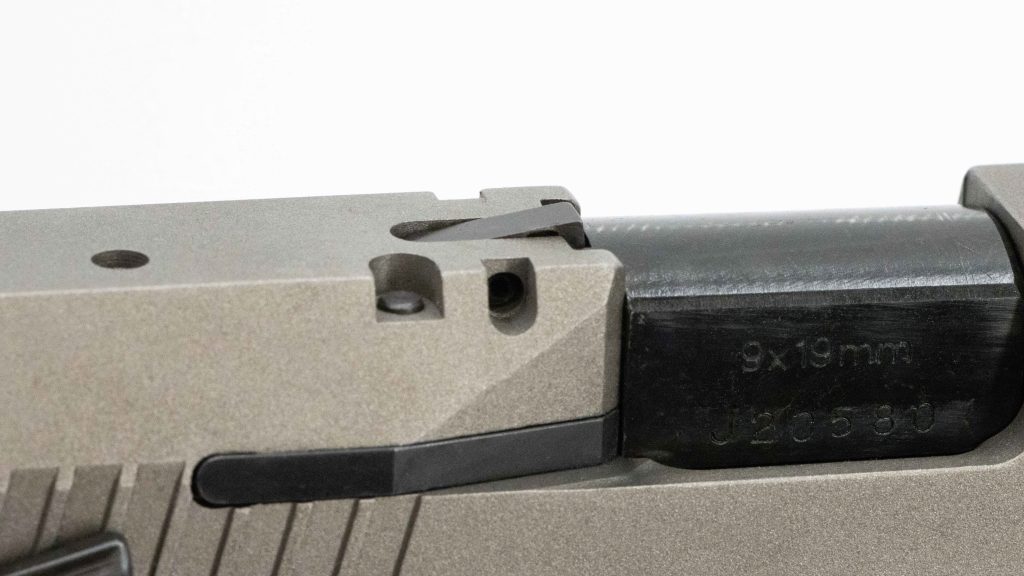
The TPR9’s controls are on both sides of the gun so it doesn’t matter which hand I have free, or if the gun is being handled by a loved one. A tactile loaded chamber indicator provides for a quick check and easy reassurance. Because the TPR9 has been around for several years existing well outside the moment’s latest “cool gun” category, they can be found for under $400 so I won’t cry if I need to replace it.
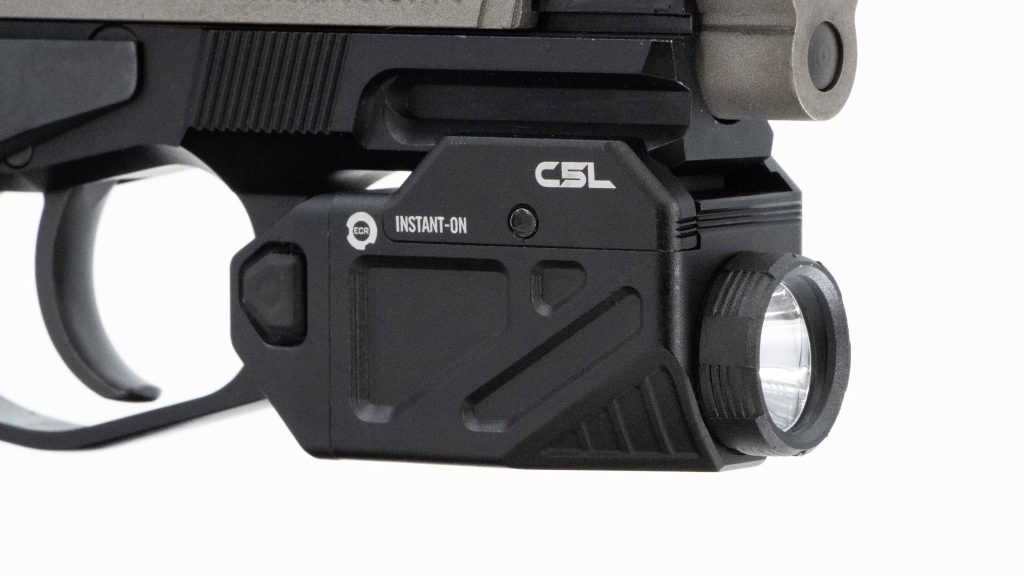
My house is loaded with motion sensors for alarms and lights both on and off grid, but desire for the ability to light up a potential target remains, so I added the Viridian C5L. This light and laser combination allows for selecting between light, laser, or both and at varying intensities from 200 to 650 lumens.
One thing I discovered — and you may too — is that those mega-lumen lights being shown in high-production videos may look cool, but inside the walls of my average-size house they are way too bright. While blinding an attacker would be a plus, I need to retain my own vision to engage said attacker and what may follow.
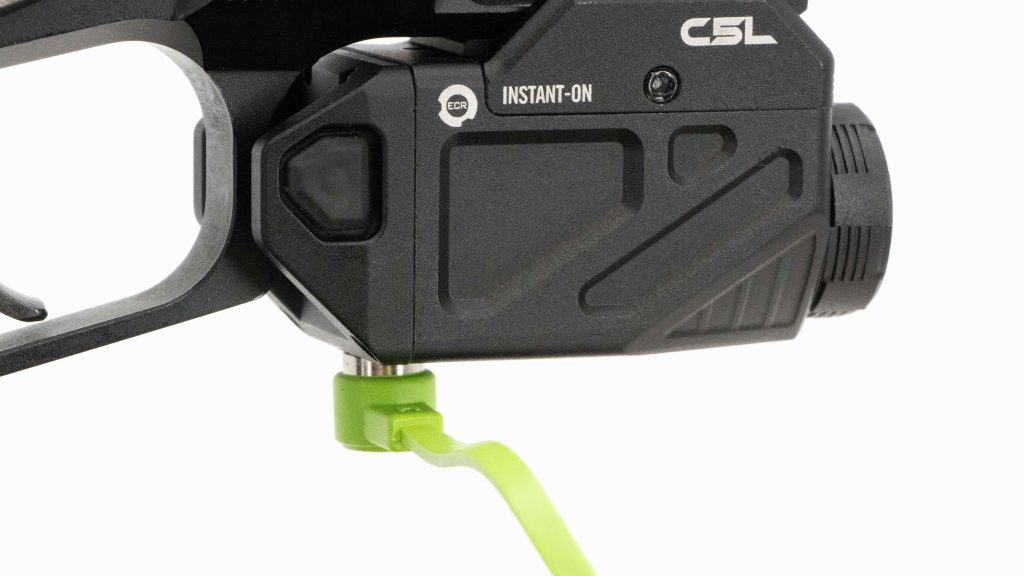
Viridian’s C5L also features “SafeCharge,” a magnetic charging cable and included battery pack which allows the user to leave the light on a charger while storing it. The cable breaks away with the slightest movement so as not to interfere with retrieving the weapon.
I went for a light with a laser because while current trends insist that red dot sights have made lasers obsolete, that seems to ignore one of the biggest advantages of a laser; the ability to aim without exposing a large amount of your body. I explore and demonstrate that in the video below.
So are there any other pop gun culture rules I’m breaking here? Yes, in the form of ammunition.
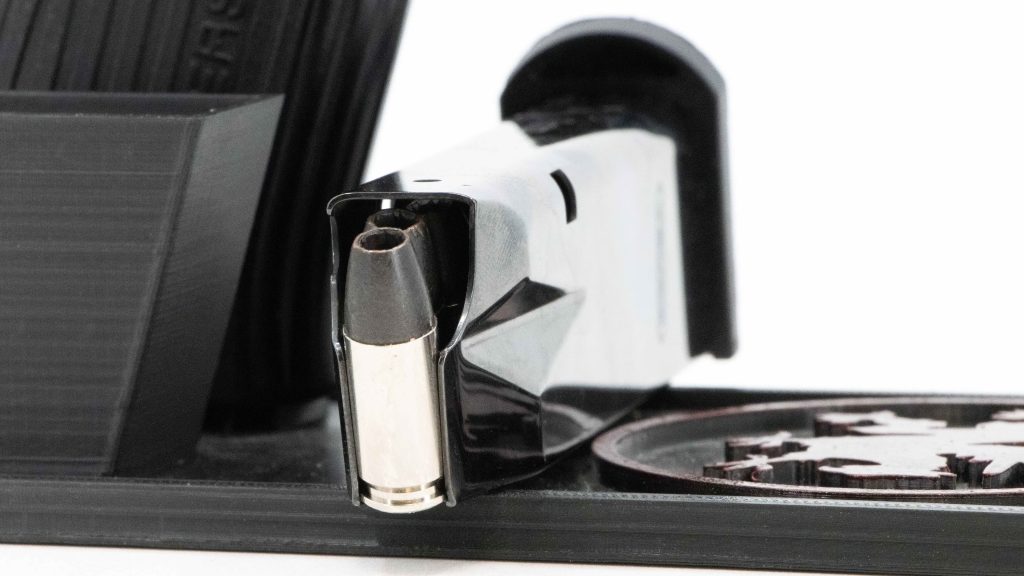
Do you remember those solid-copper hollow points that were popular for a while until backyard scientist YouTubers criticized them for not penetrating deeply enough and dumping all of their energy in the target? I saw that as the perfect house round when I’d rather burp off a couple of rounds than risk one of them passing through into a loved one or through the house and hitting a neighbor.
Your concerns may be different, but as I took the photos for this article I realized that SCHPs seem to have fallen far from grace and yet those or a frangible load like Liberty Ammunition’s Civil Defense rounds are a preferred choice of mine. Don’t forget that with a house gun you’ve got no excuse for limiting your capacity.
I hope you found this break from parroting current trends refreshing and that it got you thinking about what your house gun is and the features you’ve chosen. While my solution works for me, it won’t be the best for everyone, but I’ve done my mental homework to find what I’m comfortable having at my bedside. Have you?