

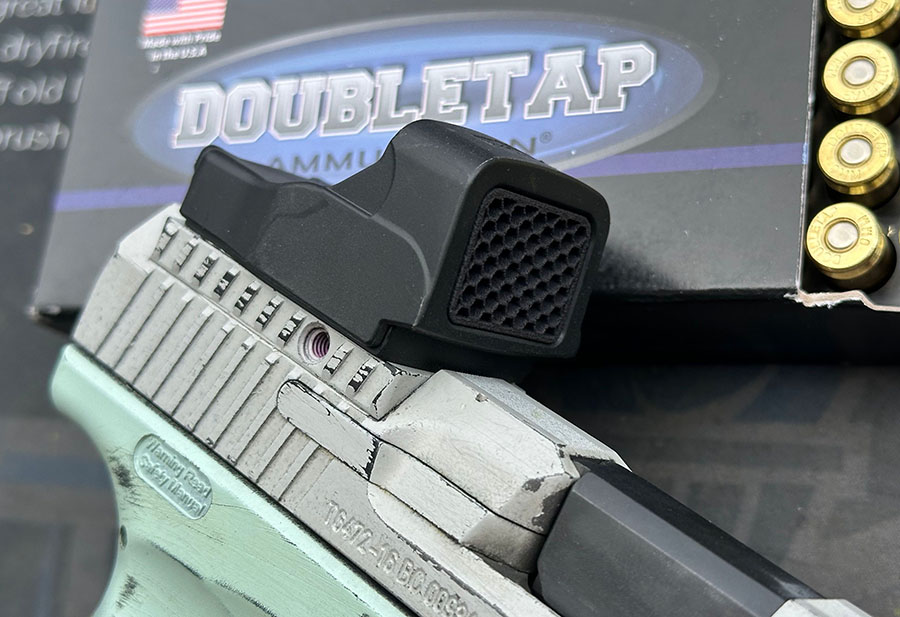
A few months ago I was conducting research regarding how to better assist shooters in the quest to hit their targets with handguns. Having several decades of experience teaching folks to shoot rifles, shotguns and handguns, I have dealt with various vision issues, even macular degeneration. However, it has only been relatively recently, in the last few years, that I have had to assist folks who had Lasik vision surgery.
But Lasik fixes vision problems, it doesn’t cause them, one of you just offered from afar. Yes, that can be true. Laser corrective surgery can fix vision issues. Nonetheless, having had multiple conversations with those who got the surgery, there are two big factors to consider. First, the corrective benefits don’t last forever. Over time vision problems begin to creep back. And, secondly, I discovered that it is common during the Lasik procedure to correct one eye to be farsighted and one eye to be nearsighted. When teaching someone to use a handgun, particularly with iron sights, that near and far sightedness situation can be an issue.
Occluded Eye Gunsight
The vision issues led me to try out an old idea in a new way. The OEG or Occluded Eye Gunsight is a device that predates modern red dot optics and goes back to the 1970s and the Cold War. In a nutshell, an OEG sight provides an easy to perceive aiming dot, but it is not a scope or optic per se. The dominant eye perceives the aiming dot and the non-dominant eye provides the target information. Your brain takes it all in and assembles the complete target picture. The US Army Special Forces experimented with the OEG on old school carrying handle M16s and had great success; day and night.
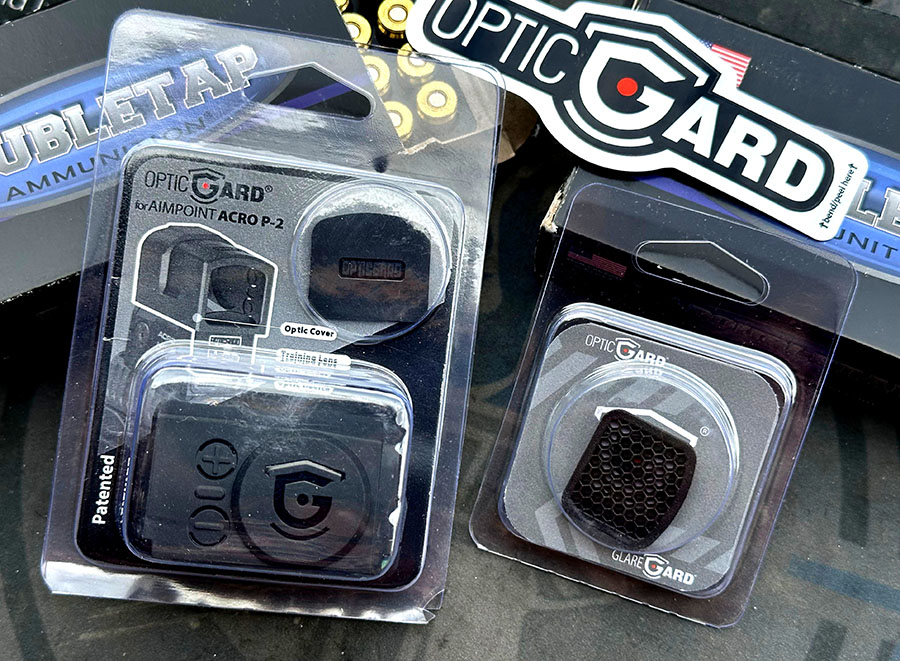
What I wanted to do was put an OEG set up on a pistol. But, I didn’t want to use tape to block out the lens. As luck would have it, I discovered a company called OpticGard who sells precision-moulded, slip-on polymer “guards” for a wide variety of pistol optics. In addition to the guard for the body of the optic, the unit comes with an opaque lens guard that you can use as an option. I ordered the OpticGard for my EOTech EFLX mini red dot and it was exactly what I needed.
The first test included hundreds and hundreds of rounds fired with the OpticGard in place, hundreds of drawstrokes and hundreds of manual manipulations of the slide. The polymer guard stayed put.
GlareGard
Fast forward from last fall to today. OpticGard now has optional add-on lens covers that they call their “GlareGard.” Experienced shooters will see the GlareGard and recognize it as a miniature killflash or anti-reflection device such as have been popular on sniper and military rifles for over twenty-five years now. The Marine Corp ACOG comes with a “killflash” device.
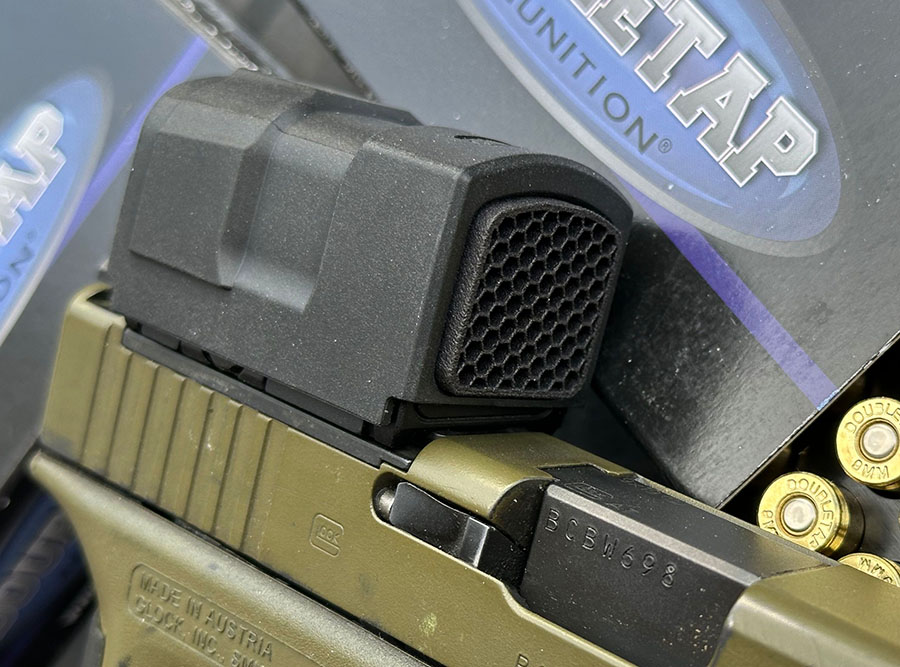
Before you scoff and think, I’m not worried about light reflection from my pistol optic, neither am I. Regardless, the idea of protecting the lens on any handgun optic was attractive to me. Thus, I ordered OpticGard and GlareGard sets for three different handguns optics; the previously mentioned EFLX, the Aimpoint ACRO, and the new OSight SE.
Rough and Realistic Use
Even if experimenting with an OEG style sight on your handgun has no appeal to you, protecting your optic investment from scratches and abuse likely will. I suppose the caveat here is that if your interest in handgun shooting is rather static and conducted in a controlled environment, you might not imagine a situation where your optic body or lens could be scratched or damaged. That’s fair.
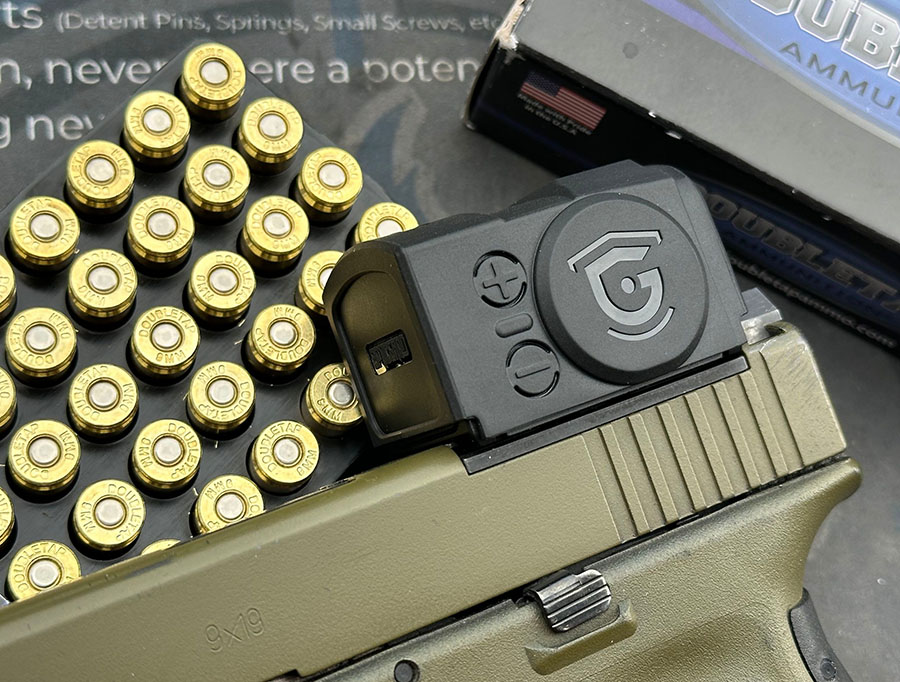
Nonetheless, when conducting and participating in realistic, dynamic training where a handgun is used in a martial fashion, our pistol/optic combination can be dropped, inadvertently run into range obstacles, and deliberately manipulated with one hand against any number of objects. While the lenses of modern optics are recessed into the bodies of the unit, they are not recessed that far.
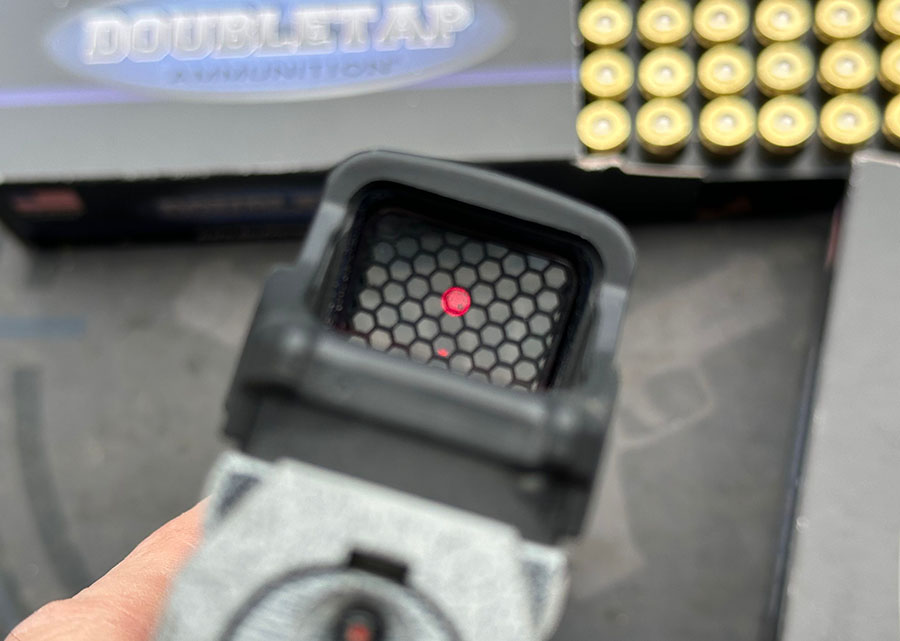
Let’s face it, if you have invested $500 to $600 in an optic and you scratch the front of the lens during dynamic training, you are not going to be a happy camper. Even if you spent $200-$300 on the optic, you are still going to be severely annoyed. The addition of the GlareGard to the protective cover would seem to go a long way toward keeping the lens from getting scratched.
Sweaty, Dirt Hands
Most instructors offer advice to the shooters who are using optics regarding the desire to run the slide by putting the palm of their support hand on the face of the optic. Sweaty and dirty hands tend to leave residue on the front of the lens hampering light transmission. Even if your hands are not sweaty or dirty, you always have the natural oil from your skin. Again, leaving a skin oil palm print on the objective lens is not something you want to do if you can avoid it.
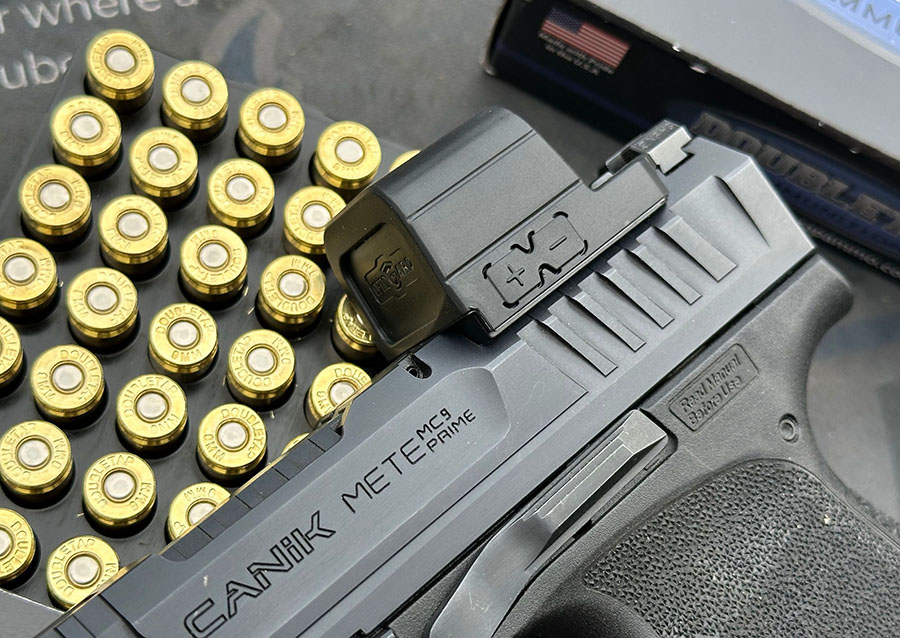
Once more, the use of the GlareGard, which you can see through, would seem to be a no-brainer solution to preventing oil, sweat, or just hand filth in general from finding its way onto your lens.
Summary
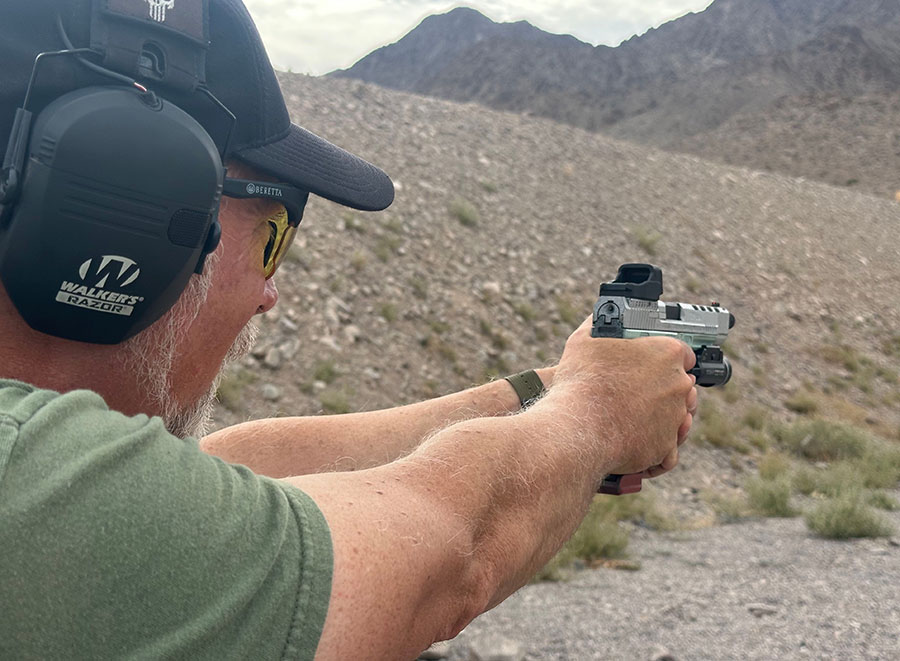
My experimentation and review of the OpticGard products is far from over. I installed the EFLX on a Canik SFX pistol, the OSight SE onto the new Canik METE Prime and what folks are calling the “tactical mailbox” Aimpoint ACRO onto a Glock 17 pistol. My experience thus far has been positive enough to recommend the relatively modest investment to protect your handgun optic as well as to engage in productive training exercises.
While the world of firearms accessories seems to be a constant stream of solutions looking for problems or answers in search of a question. These simple plastic covers have merit in my humble opinion.
Paul G. Markel is a combat decorated United States Marine veteran. He is also the founder of Student the Gun University and has been teaching Small Arms & Tactics to military personnel, police officers, and citizens for over three decades.
This is one of the best arguments for iron sights I have read in a long time.